

Problem
Kiosks and ordering panels at service points exclude wheelchair users, deaf people, people with low vision and blind people — even though they are customers like everyone else.
Accessibility · Retail and services · Poland
Coblit designed Beepsy — a height-adjustable touchscreen ordering kiosk accessible to deaf and blind people and wheelchair users.
About the project
Coblit developed Beepsy — a touchscreen ordering kiosk adapted to different groups of users. We were responsible for both the software and the design and manufacture of the device.
Project journey
Kiosks and ordering panels at service points exclude wheelchair users, deaf people, people with low vision and blind people — even though they are customers like everyone else.
Every day without a solution meant more manual work, slower service and missed opportunities.
Coblit developed Beepsy — a touchscreen ordering kiosk adapted to different groups of users. We were responsible for both the software and the design and manufacture of the device.
After the rollout, the client had a working solution that took over work previously done by hand.
Who it’s for
We see similar challenges in many companies. If you recognise yourself in this list, this project shows what we can do for you too.
 Restaurants and food service chains
 Public institutions and government offices
 Customer service points and travel agencies
 Cinemas, museums and cultural venues
 Hospitals and clinics
 Companies covered by the European Accessibility Act
Why it works
Wheelchair users, deaf people, people with low vision and blind people order on their own, so nobody is excluded from service.
A wheelchair user can reach the screen and place an order without help from staff.
Text enlargement, high contrast and voice features let people with low vision and blind people place orders.
Coblit was responsible for both the software and the device, so the two fit each other from the start.
The kiosk supports companies subject to accessibility requirements such as the European Accessibility Act.
How we ran the project
This is how we worked together on the Beepsy project: from understanding the processes, through wireframes and architecture, to rollout and further development.
We talk to the people who will use the system. We map out how processes work today, where time and money are being lost, and how they should work a year from now, once the company has grown.
We build what solves a real problem — not a list of features nobody will use.
We design screens and user journeys in Figma and test a clickable prototype with future users before the first line of code is written.
You see and test the solution at the outset — changes to a mock-up cost a fraction of changes to a finished system. You can order the analysis and mock-ups as a separate stage.
We choose technologies to match the goal, the budget and the systems already running in the company. We design the architecture, integrations and data security so that the system can grow together with the business.
 .NET
 React
No costly rework a year later — the system is ready for more users, more data and new features.
We work in short stages and show a working version every few weeks. We launch the features that deliver the biggest savings first.
You have constant visibility of progress, a say in the direction and see the first results sooner.
We test the system, migrate the data, launch it in the production environment and train the team in day-to-day use.
A smooth start without downtime — from day one the team knows how to work in the new system.
After launch we monitor operation, respond to tickets under the SLA and extend the system with further features and automations.
One partner from idea to ongoing development — you are never left alone with the system.
How we work with every client Technologies we build with
Ready for your own success story?
Facing a challenge similar to Beepsy? We’ll show you how quickly you can go from idea to a working solution.
Book a short callCompleted projects
A mobile app and website for the GEST Society that educate about disability using Polish Sign Language (PJM), easy-to-read text (ETR), video and quizzes.
See the project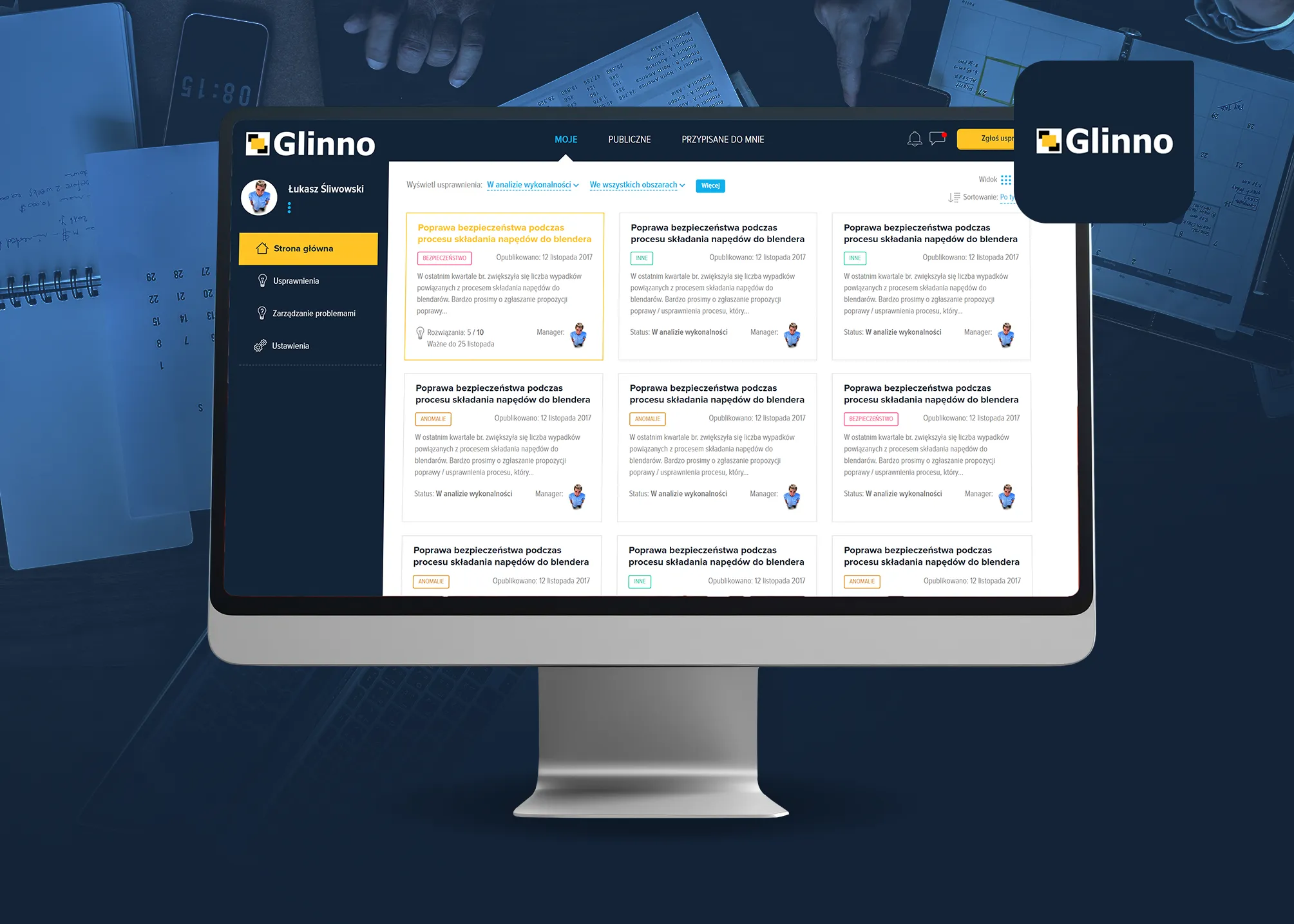
Coblit co-created and built Glinno — a system where employees report problems and ideas, and the company implements improvements the Lean and Kaizen way.
See the project